


The new founding office for the planned memorial and learning site in the former Erlangen sanatorium and nursing home has now presented itself to the city council.
The office was set up in October 2025. The first major public activities are already being prepared for 2026. These include, among other things
- the design of the west façade at Schwabachanlage 10
- the development of an interim exhibition
- initial educational programs for school classes and
- the preparation of workshops with affected associations on inclusive remembrance culture.
The process will be accompanied by various participation formats for the urban community in order to support the further development of the feasibility study.
Remembering, learning and living
Julius Scharnetzky, scientific coordinator of the founding office, presented the project to the city council. Scharnetzky, who previously worked for many years at the Flossenbürg Concentration Camp Memorial, where he was in charge of exhibition design and communication, among other things, emphasized: "In the coming months, we want to further develop the triad of commemoration, learning and living formulated in the feasibility study. However, we will not only be looking at the past, but also at the present and the responsibility we have as citizens for a diverse coexistence. Above all, we must give a voice to those who are still affected by marginalization."
By summer 2028, formats are to be developed and tested that will serve as the basis for the realization of the memorial and learning site by 2030. The aim is to
- to test innovative ways of remembering
- to include different perspectives and
- to promote an inclusive culture of remembrance - especially for and with people with disabilities and experience of psychiatry.
The first event formats have already been presented as part of the Long Night of Science.
Feasibility study as a basis
The start-up office is based at the chair of Prof. Christoph Safferling at Friedrich-Alexander-Universität Erlangen-Nürnberg. It consists of Scharnetzky, Vincent Höpfner and Dorothea Rettig from the city archive, which has played a central role in the project since the beginning. The office's main task is to further develop the steps proposed in the feasibility study. The study, which was presented at the beginning of 2025, forms the basis for a contemporary place of remembrance and education and builds on the framework concept from 2020 and the results of the urban planning competition from 2023.
The work will continue to be overseen by a steering group from the university, university hospital and city, supported by the Berlin agency chezweitz. Funding for the start-up phase is being provided by the Bavarian State Ministry of the Interior, with the long-term aim of establishing a foundation.
Responsibility for the past, present and future
Lord Mayor Florian Janik acknowledged the importance of the project: "During the Nazi era, patients were disenfranchised, neglected and deported to killing centers in the former sanatorium and nursing home. These crimes took place in the middle of Erlangen and for a long time were not sufficiently recognized as part of our city's history. The memorial and place of learning that is being created is a key step towards keeping the memory alive and taking responsibility for the present and future." Janik emphasized that the establishment of the founding office is an important milestone in visibly advancing the project.
Photo: chezweitz agency
Read also
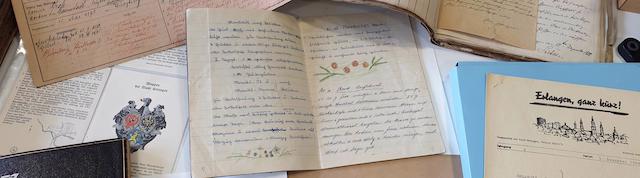
Historically interested & commemoration
Erlangen has a long history, with both positive and negative events.
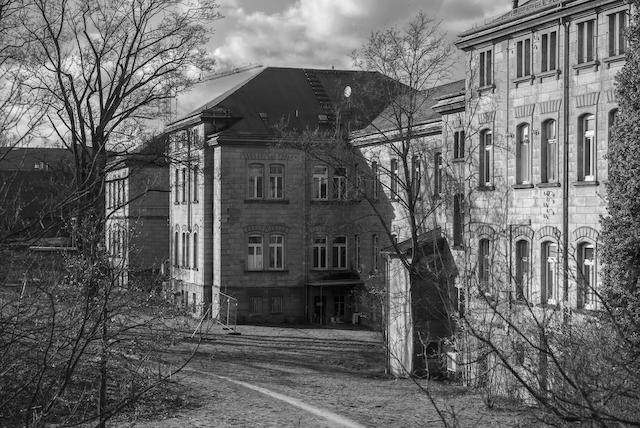
Shaping remembrance
During the National Socialist era, 905 patients from the sanatorium and nursing home were murdered in the Hartheim/Linz and Pirna-Sonnenstein killing centers. In addition, a total of 1906 patients died between 1939 and 1945, at least 700 of them from "starvation diet" and structural neglect.
Historically interested & commemoration
Erlangen has a long history, with both positive and negative events.
Shaping remembrance
During the National Socialist era, 905 patients from the sanatorium and nursing home were murdered in the Hartheim/Linz and Pirna-Sonnenstein killing centers. In addition, a total of 1906 patients died between 1939 and 1945, at least 700 of them from "starvation diet" and structural neglect.