


Why is it harmful to the animals?
- Bread contains, among other things, leavening agents, sugar, and salt. This causes it to swell in the animals’ stomachs and throats. It leads to colic and diarrhea and causes the animals great pain. In the worst cases, it can lead to their death.
- Most of the food given to them becomes moldy and rotten. When animals eat this waste, they become sick or die in agony.
- A diet of bread can lead to nutritional deficiencies in the animals, making them more susceptible to disease.
- Wild animals follow their instincts. In the water and along the shore, they find plenty of aquatic plants and small creatures such as snails and worms—even in winter.
- Leftovers attract animals such as mice and rats. For rats, not only are the leftovers a feast, but so are the surrounding bird nests.
- Feeding keeps too many birds artificially at the lake and too many fish in the water, leading to overpopulation and disrupting the natural balance. This overpopulation and the resulting lack of space cause the animals to become stressed and behave aggressively. This can also trigger other behavioral disorders during mating, breeding, and rearing young. The animals’ natural living conditions are artificially altered.
- Regular feeding and targeted “hand-feeding” cause the animals to lose their natural flight instinct. This leads to an increasing number of dangerous conflicts with road traffic or through contact with dogs and cats.
- Feeding the animals bread and overpopulation are evident “in abundance” in the form of feces along the shore. Bacteria and viruses in the feces can be transmitted to humans through contact with pets, leading to illnesses or infections. Children playing may also come into contact with the feces.
Why does pollution occur in bodies of water?
- The animals’ feces, which have an unnatural composition, further pollute the water bodies and reduce the water’s self-purification capacity.
- The uneaten bread and the increased amount of feces dissolve and sink to the bottom of the water body. The result is unintended overfertilization of the water. Bacterial decomposition consumes large amounts of oxygen, which can cause fish to suffocate. Thick layers of sludge and沼气 form.
- Due to the lack of oxygen, other aquatic organisms such as mussels, snails, crayfish, and worms also die off. This destroys the natural food source for birds and fish.
- The carbon dioxide released as the bread decomposes causes the algae to grow excessively. The water turns green, “blooms,” and “tips over,” which can lead to unpleasant odors.
That is why we ask:
Please help keep the pond clear and clean. Do not feed waterfowl or fish. Do not throw bread into the water! There is plenty of natural food available. Follow these suggestions—you’ll be actively contributing to water protection.
Photo: Pixabay
Read more about water protection
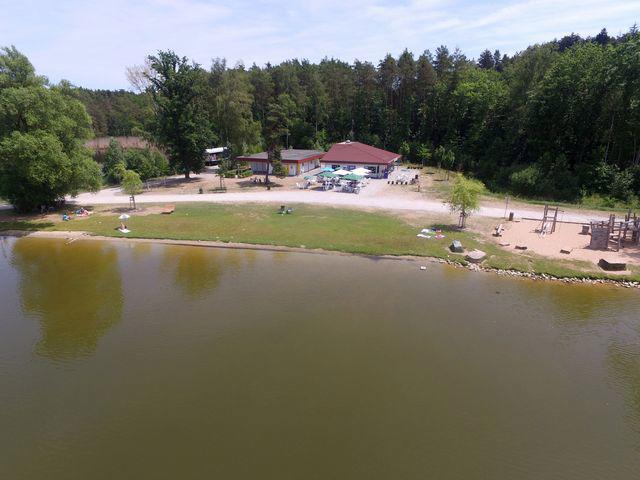
Water protection; Dechsendorf pond
The Dechsendorf pond (Großer Bischofsweiher) and the almost equally large Kleiner Bischofsweiher were created as carp ponds by the Bamberg bishops in the Middle Ages.

Introduction: Rainwater Collected in Surface Water Bodies
The water body must have sufficient capacity to prevent overflow or flooding.

Water Protection; Construction Site Drainage
The temporary lowering of the groundwater level for the purpose of keeping an excavation pit dry (construction dewatering) constitutes a use of water resources and requires a permit under water law.

Water Protection; Flood Protection in Erlangen
When water levels exceed certain thresholds, the flood warning service springs into action.
Water protection; Dechsendorf pond
The Dechsendorf pond (Großer Bischofsweiher) and the almost equally large Kleiner Bischofsweiher were created as carp ponds by the Bamberg bishops in the Middle Ages.
Introduction: Rainwater Collected in Surface Water Bodies
The water body must have sufficient capacity to prevent overflow or flooding.
Water Protection; Construction Site Drainage
The temporary lowering of the groundwater level for the purpose of keeping an excavation pit dry (construction dewatering) constitutes a use of water resources and requires a permit under water law.
Water Protection; Flood Protection in Erlangen
When water levels exceed certain thresholds, the flood warning service springs into action.