Wichtiger Hinweis
Strategic plan LGBTQIA*
Stand: 02.04.2026
The city of Erlangen is the third major Bavarian city to use the plan to underline its commitment to the rights and visibility of LGBTQIA* people - i.e. lesbian, gay, bisexual, trans, intersex, queer and agender people. The strategic plan guides the work in the area of LGBTQIA* issues.
On March 31, the International Day for the Visibility of Trans People is celebrated worldwide. This day
- recognizes the achievements, experiences and successes of trans people and
- makes their realities visible.
At the same time, it draws attention to existing challenges and the need to further advance equality and social participation.
Strategic plan for diversity, equality and participation of queer people
After Nuremberg and Munich, Erlangen is the third major city in Bavaria to have its own LGBTQIA* strategic plan. This was unanimously approved by the Main, Finance and Personnel Committee in February.
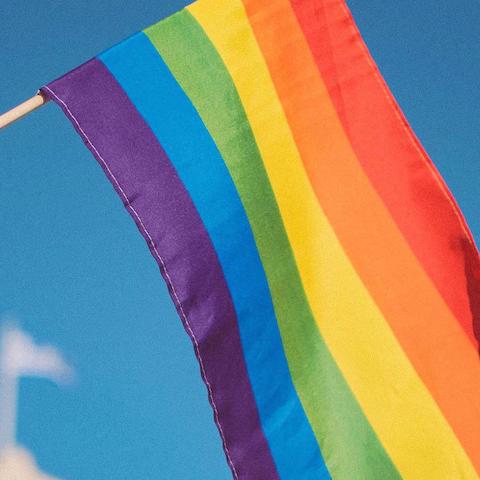
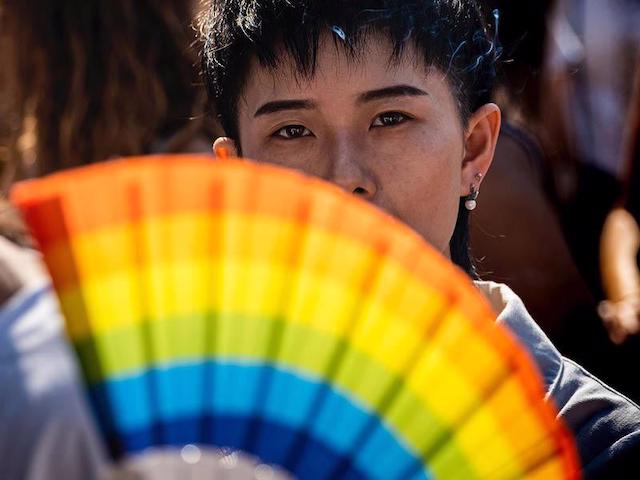
Making queer life visible (Photo: adobe stock)
In recent years, queer life in Erlangen has become increasingly visible - supported by committed initiatives and an active urban society. The new strategic plan creates a clear, transparent and impact-oriented basis for the city administration's future actions.
The plan was developed by the Office for Equal Opportunities and Diversity / International Relations in close cooperation with MakeYourTownQueer e.V.
Objectives of the strategic plan
The strategic plan focuses on three central impact objectives:
- Strengthening acceptance and visibility
- Promotion of equal participation
- Inclusion in municipal decision-making processes.
These goals are supplemented by specific strategic measures that will guide the work of the city administration in the coming years.
The strategic plan is designed for a period of five years. It is intended to make a sustainable contribution to the further development of Erlangen as a diverse and inclusive city.
LGBTQIA* strategic plan for the city of Erlangen
Queer life in Erlangen has become more visible in recent years and is increasingly part of everyday life in Erlangen. According to nationwide surveys, 11 percent of people in Germany consider themselves LGBTQIA* (abbreviation for lesbian, gay, bisexual, trans, inter, queer and asexual/aromantic). Applied to Erlangen, it can be assumed that there are around 12,000 queer people.
After groups and associations were already active in Erlangen and the surrounding area with the aim of self-organization and representation of interests, the association #MakeYourTownQueer e.V. was founded in Erlangen in 2019. The two youth groups QueErlangen and the queer youth club Kuh have also existed since this year. Since 2020, #MakeYourTownQueer e.V. has been organizing the annual Erlangen Christofer Street Day (CSD) with the associated Pride Weeks as a program of events. The Erlangen CSD has now developed into the largest regular rally in the city (approx. 4000 participants in 2025).
The Queer Center Erlangen opened its doors in autumn 2024. Over 10 groups and associations now make intensive use of the center. The Queer Center itself also offers advice, youth work, events and cultural events, as well as exchange with each other and with supporters.
1.1 Activities of the Office for Equal Opportunities and Diversity/International Relations in the area of LGBTQIA* issues
From 2015, a professional exchange took place in the Nuremberg metropolitan region between municipal representatives, universities and civil society as part of a working group. The introduction of the SOGI (Sexual Orientation and Gender Identity) department in 2017 in the Office for Equal Opportunities and Diversity/International Relations was a significant institutional step towards equal participation and the removal of barriers for queer people in Erlangen. The department has since been renamed "LGBTQIA* Concerns" after this abbreviation became more widely known. As a cross-sectional task, the work area is part of both the Equal Opportunities Office and Diversity Management. In particular, it includes (strategic) support for the queer community, awareness-raising and public relations work, opening up municipal services, advising municipal departments and individuals. Since 2017, it has regularly hoisted a rainbow flag at the town hall, for example on Erlangen's Christopher Street Days, and participated in the CSD supporting program, for example through the associated festive town hall reception from 2023 or through themed events in cooperation with the city library. A key milestone was the founding of the Queer Center 2024, which was accompanied and supported by the Office for Equal Opportunities and Diversity/International Relations.
In 2017, the study "Sexual self-determination in the municipality. Stocktaking and recommendations for action for the cities of Nuremberg and Erlangen" by Ronja Heß and Imke Leicht, which analyzed activities and needs in the area of LGBTQIA* for the two major cities and supported the further development of municipal work with recommendations for action. In 2022, strategic goals were developed for the area of LGBTQIA* issues in the coming years.
The City of Erlangen's LGBTQIA* strategic plan is intended to further structure the work done to date, make it transparent and strengthen its effectiveness and sustainability.
1.2 Starting point for municipal work in the area of LGBTQIA*
Following the growing acceptance of sexual and gender diversity, queer people have been subjected to increasing hostility in recent years throughout Germany and in many regions of the world: The Federal Criminal Police Office measured an almost tenfold increase in crime against LGBTQIA* from 2010 to 2023. In 2023, over ten percent of reported hate crime was directed against LGBTQIA*. In 2024, the Amadeu Antonio Foundation registered a record number of threats, disruptions and attacks at CSD demonstrations. Even though a majority of the German population is in favor of acceptance and equal rights for queer people, approval ratings have declined in recent years.
The study "How are you?" (HAY study) examined the living situation of LGBTQIA* young people in Bavaria. Over 90 percent of respondents stated that they had experienced discrimination; around three-fifths of respondents were also assigned to the "low well-being" category with regard to their psychological situation.
This situation and mood is also reflected in Erlangen and can be seen, for example, in the repeated theft of hoisted rainbow flags in the city area, damage to the "rainbow benches" in Nürnberger Straße (near Arcaden) and in social media.
This contrasts with the legal situation in Germany, which, in addition to Articles 1 to 3 of the Basic Law, includes the General Equal Treatment Act, enacted in 2006, the decision in favor of the third gender option by the Federal Constitutional Court and the introduction of "marriage for all" in 2017 or the Self-Determination Act (SBGG). These laws and legal rulings also form the basis for municipal action and require both a corresponding attitude and corresponding action in order to resolutely counter discrimination and attacks based on sexual orientation or gender identity and to strengthen equal treatment of LGBTQIA*.
The City of Erlangen has supplemented and deepened these legal obligations by joining the Diversity Charter in 2012 and initiating and signing the "Erlangen Declaration for Diversity, Respect and Tolerance in 2025". The city of Erlangen has thus once again committed itself to the central values for a vibrant, democratic and diverse coexistence and their active implementation. At this point, the appreciation of diversity and equal participation as well as a life free of discrimination should be mentioned in particular.
The need for strategic diversity mainstreaming with regard to LGBTQIA* in the city of Erlangen is based on international and fundamental rights and is substantiated by the municipal anchoring of the Diversity Charter and the Erlangen Declaration. Scientific debates confirm the need.
2.1 Impact orientation
In the orientation towards impact (see Phineo gemeinnützige AG (2021): Kursbuch Wirkung), a distinction is made between activities (output), changes for target groups (outcome) and changes in society (impact). The approach advocates assessing and planning one's own work not solely on the basis of the activities carried out, but rather their target-oriented effects. To this end, the impact objectives are first defined at a societal level in an impact logic in order to define the impact objectives for the target group(s) and the necessary activities and resources from there.
This approach formed the basis for the development of the impact objectives for the LGBTQIA* strategic plan.
Particularly in view of tight budgets, we deliberately refrained from formulating measures that would have an impact on the budget.
As impact targets define the specific structural (and social) changes that are being sought, they cannot be viewed in terms of their achievability within 5 years. Rather, the impact targets serve as long-term overarching guidelines. They can therefore be used to formulate specific strategies and targets for action.
The formulated impact targets (see Chapter 3) are supplemented by strategic sub-targets. The concrete implementation of the strategic and impact objectives is updated in the annual work programs.
2.2 Participation and development process
The impact objectives and key content of the LGBTQIA* strategic plan were discussed and developed in collaboration with representatives of #MakeYourTownQueer e.V.. This is to ensure that the strategic plan is oriented as closely as possible to the actual needs of queer people in Erlangen and that constructive cooperation with interest groups is guaranteed.
These objectives will serve as a guideline for strategic and impact-oriented work and action planning in the area of LGBTQIA* over the next five years.
1.1 The City of Erlangen positions itself as a supporter of SOGI diversity and acts authentically in this regard. (internal and external)
Through positive public relations work, the city of Erlangen shows that LGBTQIA* people are part of the city's society and are actively supported and involved. In addition to communicating progress, it also identifies social problems (e.g. violence against queer people) and its own need for action.
The city of Erlangen continues to participate in action days and formats (e.g. Christopher Street Day, International Day against Queerophobia IDAHOBITA* and German Diversity Day) with its own public relations work, events and further support. It takes measures to clearly and consistently counter hate comments, particularly on social media.
In addition to city-wide public relations work, this positioning also takes place in internal communication (e.g. on the intranet, newsletter).
1.2 Public relations work includes LGBTIQIA* people as individuals and fellow human beings.
Through specific public relations work on activities and action days for LGBTQIA*, queer people are made visible in images and text free of clichés.
The diversity dimensions within the queer community are taken into account and made visible in order to depict the reality of queer people's lives as accurately as possible.
Queer life becomes recognizable in public spaces in Erlangen
Exemplary goals for action: Maintenance of the rainbow benches in Nürnberger Straße
1.3 SOGI diversity and the needs of individual groups are known within the city administration. Employees have knowledge and skills regarding sexual orientation and gender identity in their area of work.
Queer employees of the City of Erlangen can come out and work free from discrimination.
Knowledge about the needs of queer people and the corresponding skills in the work context are taught and acquired.
Exemplary action goal: By addressing the topic in further training courses, mandatory for managers and junior staff and as a priority for employees in departments with advisory activities and public access.
Structural problems within the city administration are dealt with openly and in a solution-oriented manner.
1.4 Activities to promote democracy include LGBTQIA* issues.
To promote acceptance and prevent discrimination, queerness is addressed as part of diversity in democracy work, particularly in educational programs at schools.
2.1 Municipal offers & services take into account the needs of queer people and can be used by LGBTQIA* without barriers
Adjustments to offers and services that improve the participation of queer people are communicated accordingly and regularly publicized.
Exemplary action goal: Further development of existing sports and health services including swimming pools, gender-neutral changing rooms and toilets in municipal buildings
2.2 Services specifically for LGBTQIA* people and issues are continued and new ones created where necessary.
Important infrastructure (e.g. the Queer Center) remains permanently secured.
Safer spaces are offered on a sustainable basis (e.g. in the areas of health, exercise and self-defense, culture).
2.3 Knowledge about regional and intersectional needs is developed in a structured manner.
Surveys on services and needs in Erlangen and the surrounding area are updated in order to develop tailor-made solutions (e.g. analogous to the publications "Kleiner Wegweiser zu LGBTI*-Angeboten in der Metropolregion Nürnberg" and the study "Sexuelle Selbstbestimmung in der Kommune - Bestandsaufnahme und Handlungsempfehlungen für die Städte Nürnberg und Erlangen")
3.1 Queer people are included in committees and decision-making processes as experts and representatives of their interests.
3.2 Diversity mainstreaming strategies are implemented as an integral part of municipal and political decision-making processes.
3.3 The LGBTQIA* work area is included in decision-making processes as a source of expert advice.
The strategic plan serves as the basis for the LGBTQIA* Concerns work area for the next five years. The implementation of the specified impact and strategic goals through action goals and measures is described in the annual work program.
At the end of the five years, the strategic plan will continue to serve as a working basis until it is updated. The starting point for the update should be the evaluation of the work programs and the implementation of specific measures by the city administration with regard to the stated impact goals and strategic objectives.
In this way, levers can be identified that serve as the basis for a precise update of the strategy. In particular, local success factors and barriers as well as supra-regional and institutionalized needs, obstacles and successes for LGBTQIA* are included.
The evaluation and updating will again be carried out with the participation of the queer community.
Read also
LGBTQIA*
The abbreviation LGBTQIA* stands for "Lesbian, Gay, Bisexual, Trans, Queer*, Inter and Asexual*". The asterisk keeps the space free for diversity categories.
Equality & gender equality
The Equal Opportunities Office supports all residents of Erlangen and the employees of Erlangen City Council. We want to realize the fundamental right to gender equality in all areas of social life and see this as a cross-sectional task.
Anti-discrimination
We are committed to anti-discrimination: For us, all cultures are equal, as are all genders, sexual identities and people with severe disabilities. What's more, we are convinced that diversity enriches us. That is why we are happy when Erlangen is as diverse as possible.
LGBTQIA*
The abbreviation LGBTQIA* stands for "Lesbian, Gay, Bisexual, Trans, Queer*, Inter and Asexual*". The asterisk keeps the space free for diversity categories.
Equality & gender equality
The Equal Opportunities Office supports all residents of Erlangen and the employees of Erlangen City Council. We want to realize the fundamental right to gender equality in all areas of social life and see this as a cross-sectional task.
Anti-discrimination
We are committed to anti-discrimination: For us, all cultures are equal, as are all genders, sexual identities and people with severe disabilities. What's more, we are convinced that diversity enriches us. That is why we are happy when Erlangen is as diverse as possible.
Office for Equal Opportunities and Diversity / International Relations
Anschrift
Öffnungszeiten
Additional individual appointments